
Architectural Photography: The Rigor of Symmetry and the Frontal Viewpoint
- Mar 29
- 2 min read
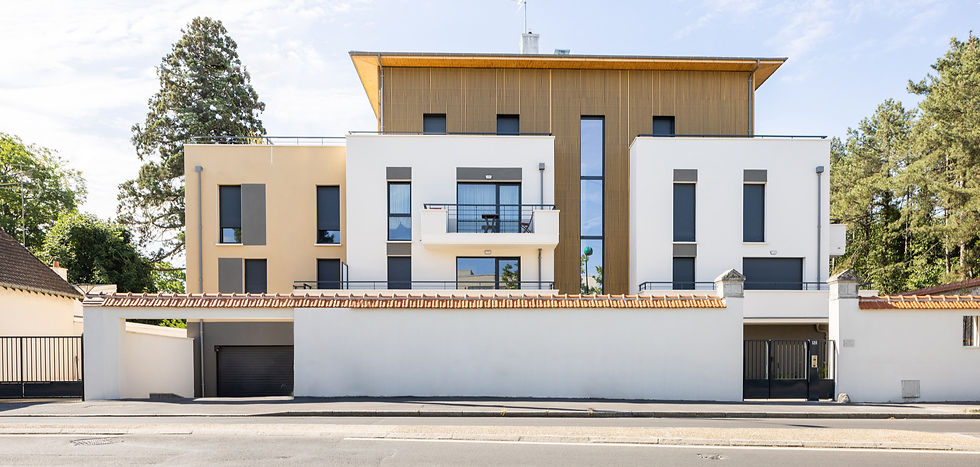
In the collective imagination, architectural photography is often associated with dynamic perspectives, vanishing angles, and dramatic low-angle shots. Yet, the noblest image, the one that serves as the absolute reference for the architect, is often the most static in appearance: the frontal view. This choice of framing, which places the viewer directly in front of the building, is not an easy solution. On the contrary, it is a rigorous approach aimed at translating the intellectual concept of the project, the elevation plan into a tangible reality. It is what one might call the "official portrait" of the building.
From Plan to Image: Respecting the Architect's Intent
When an architect designs a building, they initially work on two-dimensional plans: the elevations. These drawings define the proportions, the balance of masses, and the rhythm of openings without the distortion inherent in human perspective. By positioning my camera perfectly parallel to the facade, my goal is to restore this original vision. This viewpoint cancels the vanishing lines that usually guide the eye into the depth, forcing the gaze to rest on the very structure of the edifice. It is a mark of respect for the architect's drawing: we are no longer in the subjective interpretation of a volume, but in the faithful demonstration of geometry and scale relationships as they were thought out on the drawing board.
The Dictatorship of the Millimeter: Absolute Technical Rigor
While the visual result may seem calm and obvious, the technical execution of a frontal view requires total intransigence. Symmetry tolerates no approximation. A shift of the camera a few centimeters to the left or right, or a tiny tilt of the lens, and the balance collapses: the eye immediately perceives the defect, making the image look wobbly or unsettling. This is where professional expertise and the use of specific equipment, such as tilt-shift lenses, become crucial. My priority is to ensure that all vertical lines remain strictly parallel to each other, thus avoiding the effect of a "falling building." This absolute verticality gives the subject a stability, strength, and monumentality essential to reading the project.
Graphics Above All: Transforming the Building into a Canvas
By removing the narrative depth of field, the frontal viewpoint transforms the building into a true graphic work. The viewer's attention is no longer focused on the 3D volume, but on the "skin" of the architecture. It is the ideal angle to reveal the richness of textures and the precision of the craftsmanship: the layout of wood cladding, the regularity of stone joints, or the reflections of a glass wall become the main subjects of the photo. The building then becomes a pattern, an abstract composition where the repetition of elements creates a hypnotic visual rhythm. These images, often treated like paintings, are those that leave the most lasting impression in an architecture portfolio, as they summarize the aesthetic essence of the project in a single glance.
Conclusion
Symmetry and the frontal view are not constraints, but tools for clarification. They allow architecture to be read with the same precision as one would read a musical score, offering the building a timeless and statutory presence.
Do you wish to document your project with rigor? Let's discuss how to highlight your projects.